

When you’re preparing to buy a home or refinance in the United States, choosing the right mortgage is one of the biggest financial decisions you’ll face. Over my years helping clients with Heart Mortgage, I have seen that the two most common options are conventional and FHA loans. Even though both can lead you to the keys to your own place, they have different rules, costs, and benefits. The best choice really depends on your credit, budget, and long-term plans.
Understanding the main types of mortgages
Most clients I work with have heard of conventional and FHA loans. But a lot of people don’t realize how fundamental the differences are until they start the mortgage process.
Conventional loans are mortgages not backed by the government, offered by private lenders with their own rules on approval, rates, and insurance. In contrast, FHA loans are mortgages insured by the Federal Housing Administration, a part of the U.S. government, since back in 1934.HUD documents that since 1934 the FHA has insured over 40 million home loans.
Both types help people buy, refinance, or invest in real estate. Still, the way you qualify and the payments you make can differ a lot. In my experience, clients truly benefit from seeing the real side-by-side contrasts, instead of just being handed a list of possible loans.
The right mortgage isn’t about what’s popular. It’s about what fits your life.
Defining conventional loans
If you have a solid credit history and a stable income, you may lean toward a conventional loan. Offered by banks, credit unions, and mortgage companies, these loans aren’t directly backed by a government agency. They can fit a wide variety of property types and frequently reward higher credit scores and larger down payments with lower rates or fewer monthly fees. Most conventional loans follow standards set by Fannie Mae and Freddie Mac.
Here’s how I usually explain it to clients:
- Conventional mortgages generally require a higher credit score.
- They’re not insured by federal programs (the risk is with the lender).
- If you put down less than 20%, you usually pay private mortgage insurance (PMI).
- Loan limits change each year, but allow for higher borrowing than most government programs.
What makes an FHA loan unique?
When a client has limited savings, bumps in their credit record, or is buying their first home, I often find an FHA loan feels less daunting. The Federal Housing Administration’s mortgage insurance offers lenders protection, allowing buyers to qualify with less-than-perfect credit and a smaller down payment.
Some FHA loan highlights:
- Lower minimum down payment, sometimes as low as 3.5%.
- More forgiving qualification criteria, especially on credit.
- Requires upfront and monthly mortgage insurance payments.
- Set loan limits, which are often lower than conventional max amounts.
For a full breakdown of FHA details and qualification tips, the FHA loan guide for first-time and low credit homebuyers covers scenarios I’ve frequently encountered at Heart Mortgage.
Looking at the market: Popularity and usage trends
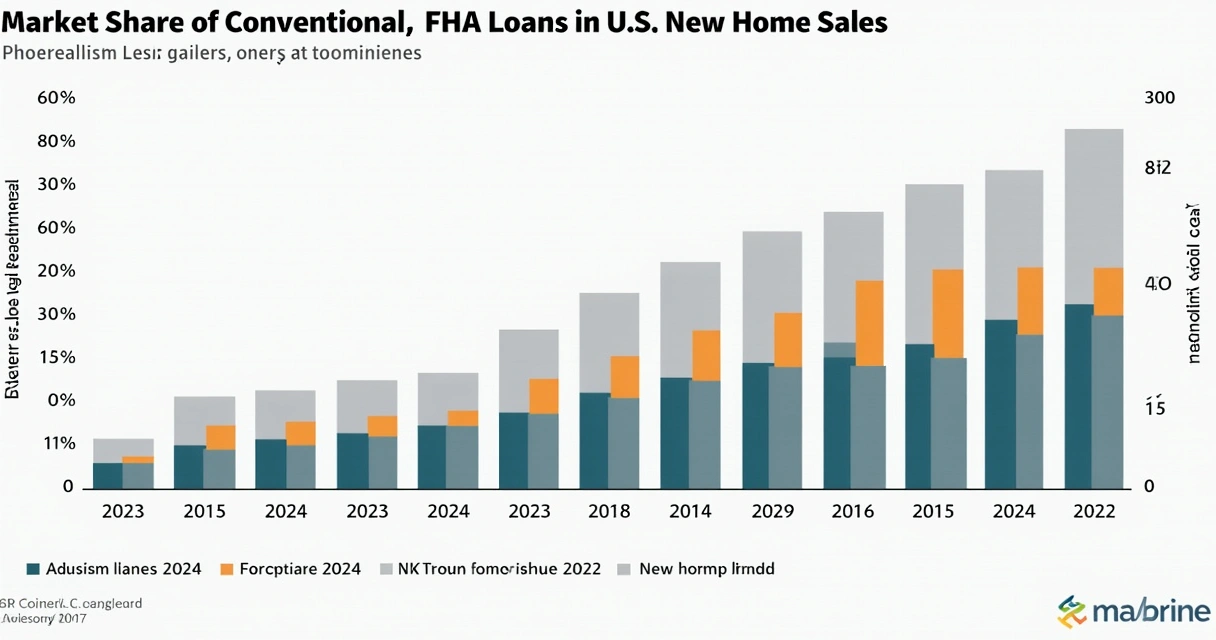
How common are these loan types? Evidence shows the popularity of conventional vs FHA options is always shifting. For example, in 2024, conventional loans financed 69.3% of new home sales, while FHA and similar loans made up 31.0%.conventional loans financed 69.3% of new home sales That’s a slight rise from 2023, confirming conventional mortgages remain the mainstream choice.
Back in Q1 2023 though, FHA loans had their highest new home sales share since 2007 at 11.7%.FHA-backed loans made up 11.7% of new home sales Still, the overall pattern: If you meet the tougher requirements, conventional is usually more common, but FHA programs open doors for people who’d otherwise struggle to buy.
Eligibility: Your credit, income, and history
In my day-to-day at Heart Mortgage, I see how the first block many buyers hit is the eligibility screening. Small details about your finances can make a major difference in the options that make sense for you.
How credit scores shape your options
Credit score is usually the biggest factor in determining your eligibility and costs for both types of mortgages. Here’s what I’ve seen:
- Conventional: Most lenders want a score of at least 620, but 680-740+ is needed for the best rates. Some exceptions exist, but costs go up below that.
- FHA: With 3.5% down, you can sometimes qualify with a score as low as 580. For scores from 500 to 579, a 10% down payment is usually required.
Your credit score can open doors or close them.
It’s not just about the minimums. Most clients find a better deal with a better score. But if your credit is bruised, FHA might be the safer bet.
Other eligibility details
Beyond credit, here’s what else matters:
- Debt-to-income ratio (DTI): For conventional loans, most lenders prefer DTI under 45%, though there’s some flexibility for strong applicants. FHA is more forgiving, approving some applicants up to about 50% DTI.
- Income and documentation: Both types require steady income (job, business, or documented alternative), usually for two years or more.
- Bankruptcy or foreclosure history: FHA usually waits at least 2-3 years after bankruptcy or foreclosure; conventional can be stricter.
Down payment: How much money do you need up front?
Homebuyers have strong opinions on down payments. I see some who have saved for years dreaming of ‘20% down,’ and others just getting started with what they have.
With conventional loans, you can make down payments as low as 3% for some borrowers, but 5-20% remains common to avoid extra insurance or get better rates. For FHA, the headline down payment is 3.5%. First-time homebuyer programs and grants can help you reach these minimums.
The down payment is just the start. Monthly payments matter too.
There’s a difference between what’s allowed and what saves you money. Putting down more, if possible, can lower your monthly costs, remove some insurance, and help you stand out with sellers.
Mortgage insurance: Comparing PMI vs MIP
Most buyers who put down less than 20% will pay some form of mortgage insurance. But the rules are totally different between conventional and FHA mortgages.
- Conventional: You pay private mortgage insurance (PMI) if your down payment is under 20%. PMI rates depend on credit score and loan amount. The good news is PMI can typically be cancelled when you reach 20% equity, sometimes automatically at 22%.
- FHA: You’re required to pay Mortgage Insurance Premium (MIP), both up front (UFMIP, usually 1.75% of the loan) and monthly. For most borrowers with less than 10% down, monthly MIP stays for the life of the loan unless you refinance into another type.
Mortgage insurance can be a deal-breaker for some, especially for those planning to stay in their home for decades.
Loan limits: What can you actually borrow?
Every homebuyer wants to know how much they can borrow. There isn’t one blanket answer, but conventional and FHA loans set clear maximum limits each year based on average home prices and the area you’re buying in.
As of 2024, typical conventional loan limits (called “conforming”) are $766,550 for a one-unit property in most U.S. counties. High-cost areas sometimes allow higher limits. FHA loan limits vary by county, usually lower than conventional, but still adjusted to local housing markets.
This matters a lot if you’re house shopping in markets with steep prices, or buying a multi-family property. If you need to borrow above the standard limits, you’ll have to look at special programs or consider splitting a purchase. To learn even more about how these limits play into your overall loan options, I recommend reading our piece on conventional loans’ requirements, benefits, and drawbacks.
Interest rates: Conventional or FHA?
Interest rates change daily, but some trends have held steady through my years working in mortgage lending. One common question is: Which type offers lower rates?
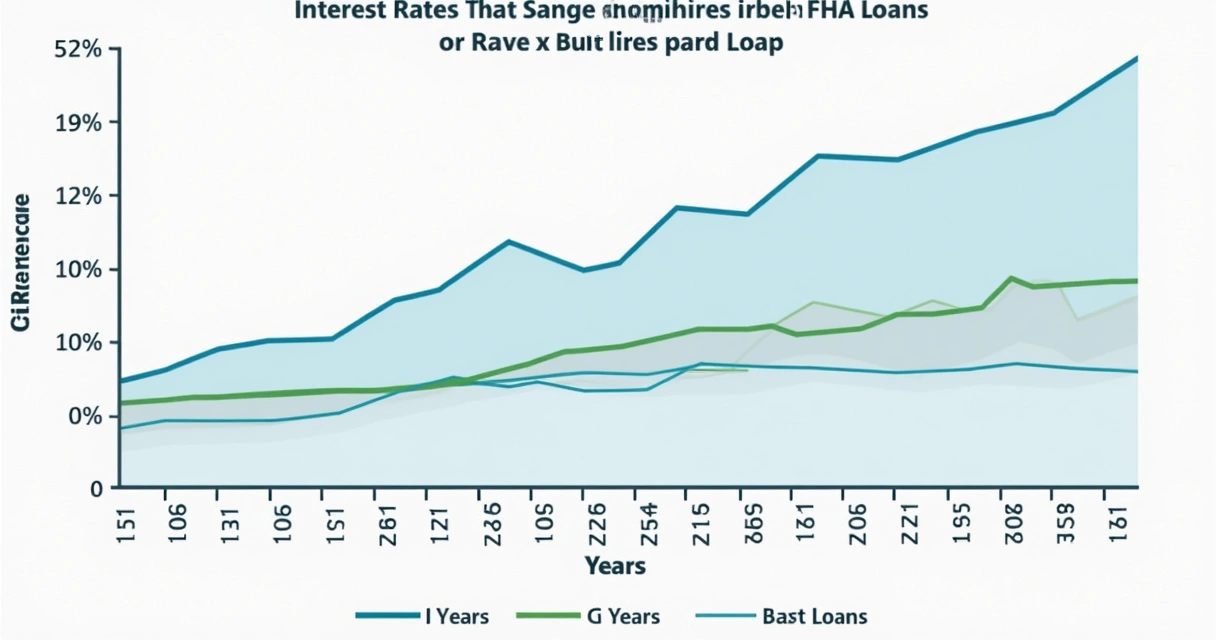
FHA loans usually have lower base interest rates than conventional loans for buyers with lower credit scores, but the addition of mortgage insurance premiums can push total payments higher. For buyers with strong credit, conventional rates can be just as low or lower, and if you put at least 20% down, your monthly payment could be much less overall.
It pays to compare full monthly costs rather than just focusing on the main advertised rate.
Appraisal and property condition: What are the rules?
Every mortgage needs an appraisal, but FHA and conventional loans judge homes a bit differently.
- Conventional: Appraisers check that the value matches the price paid. Property standards are straightforward: the home must be livable, structurally sound, and have utilities working, but there is more flexibility on cosmetic issues.
- FHA: The appraisal process is stricter. The home must meet detailed guidelines for safety, soundness, and security. Things like peeling paint, missing handrails, or older roofs can all cause delays or denials. This is meant to protect buyers, but it sometimes limits the homes you can buy.
For buyers looking at older properties, this FHA checklist can be frustrating. Still, it has helped my clients avoid costly repairs and surprises.
A good home inspection matters, whichever loan you choose.
Refinancing: When does switching make sense?
Refinancing is a common way to lower your payment, tap into equity, or drop mortgage insurance. I see clients do this regularly as markets, incomes, or interest rates change.
- Conventional loans: You can refinance to lower your rate, shorten the term, or switch out of PMI. If you reach 20% equity, most lenders let you drop PMI automatically through a refinance, or even without refinancing.
- FHA loans: FHA models like the ‘FHA Streamline’ refinance offer fast paths to lower payments. However, MIP remains unless you convert to a conventional loan. Many people start with FHA, fix their credit, then refinance to conventional to remove monthly insurance.

Refinancing can be your ticket to better terms once your finances improve or market rates shift downward. Just remember that closing costs, required equity, and timelines can all affect the benefits.
Typical buyers: Which mortgage fits your profile?
To make the differences between conventional and FHA loans easier to grasp, I use examples like these with my clients.
First-time buyers with limited savings
FHA loans are popular with first-timers. If you have a steady job but less than perfect credit and only a small down payment saved, FHA opens the door to buying. I’ve worked with plenty of new Americans, young professionals, even self-employed people who started here. The lower credit minimums, fixed interest, and easier qualification rules make it a good match.
Buyers with strong credit and higher down payments
For buyers with a FICO score in the high 600s or above, stable employment, and at least 5-20% down, conventional loans often offer better overall monthly payments, especially once insurance is factored in. Many people who refinance after a few years switch from FHA to conventional for this reason. And investors or repeat buyers almost always choose conventional because of the flexibility with property types, limits, and features.
Those with prior credit hiccups or non-traditional income
If your credit report has late payments, collections, or another major event, FHA is far more forgiving, sometimes your only option if you can’t wait to rebuild your score. Also, those with income from multiple sources, seasonal work, or self-employment often find FHA more flexible on paperwork, as long as you can show timely payments and the ability to repay.
Real-world examples from Heart Mortgage
- A couple with a 610 credit score, $8,000 down, and solid incomes successfully purchased with an FHA mortgage when conventional loans wanted more cash up front and a higher score.
- A young professional with a 760 credit score saved up and put 20% down, choosing conventional to avoid mortgage insurance and lock in a favorable monthly payment.
- An experienced investor bought a multi-family property with a conventional loan, which allowed rental income from the property to be counted toward loan approval.
If you want even more scenarios and advice, our mortgage resource library brings together real stories and constantly updated strategies.
Pros and cons: A side-by-side comparison
Although every client’s situation is unique, I’ve found it helps to lay out the benefits and drawbacks plainly.
Conventional loans- Better for buyers with strong credit and steady income.
- Higher loan limits in most places.
- PMI can be removed as you build equity; no FHA mortgage insurance once you pass 20% equity (with certain restrictions).
- More choices for property type and location.
- Stricter rules on credit, down payment, and debt-to-income.
- Harder for buyers with damaged credit or limited documentation.
- Less support for lower-income or first-time buyers in some cases.
- Easier qualifying, especially for first-timers or those with lower credit.
- Lower minimum down payment options.
- Stable rates and access to rehab or special situations (like manufactured homes or mixed-use).
- Lower loan limits may limit home choice in high-price markets.
- Upfront and ongoing mortgage insurance can mean higher costs long-term.
- Required property standards can limit choices or cause delays when repairs are needed.
How Heart Mortgage can help you choose
I believe that choosing between these loans isn’t just about checking a few boxes. It’s about understanding your story, your plans, your risks, and your hopes for the next chapter. That’s why at Heart Mortgage, we walk each client through not just paperwork but the heart of what a mortgage really means for their family or investment goals. Lee Dama, our CEO, makes sure we answer questions with real transparency, whether online, by phone, or in person.
If you’re not sure which loan best matches your current position, our consultative approach means we’ll look at your whole financial picture. That includes checking if local or federal programs, like FHA, could help lower your costs, or guiding you through the higher stakes of conventional purchases. Sometimes, the choice you make today sets you up perfectly for a smart refinance later. The right strategy is personal, and our experience shows that clarity can make all the difference.
Mortgage advice should empower, not confuse.
Conclusion: Finding your path to homeownership
There isn’t one single answer to the classic “conventional vs FHA” question. Every financial journey is different, shaped by your credit, your cash, and your plans for the years ahead. If you have stronger credit and a bigger down payment, conventional might offer you lower monthly payments and more freedom over time. If your credit needs work or your savings are limited, FHA is built to give still you a shot at homeownership, with a path to improvement in the future.
Over my years at Heart Mortgage, I’ve seen both options lead to growing families, new starts, and even successful investments. The best decision is the one that aligns with your real situation and brings you peace as you step into a new home. If you’re unsure which mortgage fits you best, or you’d like to discuss your choices in more detail, our team at Heart Mortgage would be honored to help you on your journey. Reach out today, and let’s put a plan together that’s truly made for you.
Frequently asked questions
What is the difference between FHA and conventional loans?
The main difference is government backing and qualification standards: FHA loans are insured by the Federal Housing Administration and are designed to be more accessible to buyers with lower credit or smaller down payments. Conventional loans come from private lenders, are not directly government-backed, and often offer better rates for those with strong credit histories. FHA loans require mortgage insurance for the life of the loan in most cases, while conventional mortgage insurance can often be removed once enough equity is built up.
Which loan is easier to qualify for?
FHA loans are usually easier to qualify for, especially if you have lower credit scores, higher debt-to-income ratios, or limited savings for a down payment. Conventional loans have stricter credit score requirements and may demand more proof of income. I have often seen buyers start with FHA and move to conventional as their finances improve.
How much down payment is needed for each?
For FHA loans, the minimum down payment is usually 3.5% if your credit score is 580 or above. If your score is between 500 and 579, you may need at least 10% down. Conventional loans may go as low as 3% for some programs, but 5% or more is more typical. Fifteen to 20% down will let you avoid private mortgage insurance on most conventional loans.
Is FHA better for first-time buyers?
FHA loans can be an excellent match for first-time buyers due to their forgiving qualification criteria, lower down payment requirements, and steady interest rates. Many first-time buyers with limited savings or less-than-perfect credit take this path. However, in some cases, first-timers with good credit and larger down payments may find conventional loans more affordable over the life of the loan.
Can I switch from FHA to conventional?
Yes, many homeowners refinance from FHA to conventional loans later. This switch can help you remove the ongoing FHA mortgage insurance and potentially reduce your monthly payments if your credit and income have improved or you have more home equity built up. The process involves a new mortgage application with full documentation, but it’s a common strategy as your finances and the housing market evolve.