
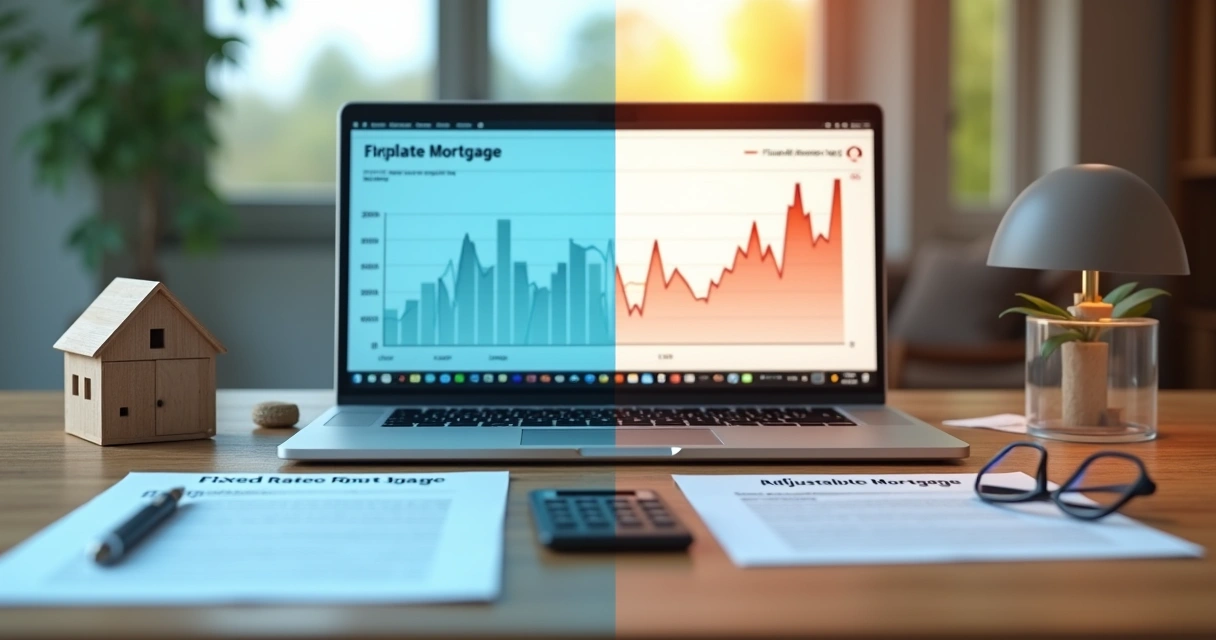
Buying a home means making choices, and one of the most impactful is how you want to pay for it. Through my years helping clients at Heart Mortgage, I’ve seen the excitement on a first-time buyer’s face, and I’ve seen the quiet calculation of a seasoned investor. Both ask me the same core question: Should I choose a fixed-rate or adjustable-rate mortgage? The answer is rarely simple, but by breaking down how each works, who they suit best, and the unique considerations for today’s market, I’ll help you get closer to a decision that fits your plans—and your peace of mind.
Understanding fixed-rate mortgages
A fixed-rate mortgage, as the name suggests, locks your interest rate for the entire loan term. Whether it's 15, 20, or 30 years, your principal and interest payment won’t change. When I work with buyers who value predictability and simplicity, this is often the first product I introduce.
Predictable payments mean more financial confidence, month after month.
- Your interest rate and payment never change over the loan term.
- Popular for those planning to stay in their home long-term.
- Often recommended for first-time buyers looking for stability.
Fixed-rate loans are especially appealing during periods of low-interest rates, because homeowners can lock in a favorable cost for decades. In my experience, people who are building a family or aiming for long-term ownership appreciate this sense of control. Even if property taxes or insurance fluctuate, the main monthly payment to the lender stays set.
How adjustable-rate mortgages work
Adjustable-rate mortgages (ARMs) start differently. They begin with a fixed period—often 3, 5, 7, or 10 years—at a rate that’s usually lower than what fixed mortgages offer at the time. After that, the rate adjusts at set intervals, based on a financial index and a set margin. This means payments could rise or fall.
The Consumer Financial Protection Bureau confirms that after the initial period, the interest on an ARM is pegged to market changes, so buyers need to know how their rate can shift and how often.
Initial savings, but less predictability once the initial period ends.
- Lower introductory rate, leading to early payment savings.
- Rates adjust after a fixed period, usually yearly.
- Capped adjustments limit how high payments can go, but there’s still risk.
The key attraction here is the low starting cost, which means lower payments and more flexibility—at least for a while. In my talks with savvy investors planning to sell or refinance before adjustments kick in, ARMs often make sense. The question, of course, is whether the risk of rising rates down the line matches your financial plans and comfort level.

Main differences: Fixed vs adjustable-rate loans
When explaining loan types, I like to emphasize real money impact. It’s not just about percentages—it’s about what comes out of your bank account each month, and how that might change as time goes on.
Payment stability and planning
Fixed-rate mortgages give you the certainty that your monthly payment won’t change, while adjustable loans introduce the possibility—sometimes even the likelihood—of those payments rising or falling after the fixed period ends. For those budgeting tightly, that stability can outweigh any initial savings an ARM offers.
Interest rate movement
With a fixed rate, you’re shielded from market swings. You get peace of mind, knowing that if rates rise, your payment remains safe. On the flip side, ARMs pass some risk to the borrower. If rates drop, you could benefit, but if rates rise, you might pay more.
Short-term vs long-term focus
From my own observations, buyers who expect to move, sell, or refinance soon after purchase are candidates for an ARM. They might enjoy a lower starting payment and never face an increase. But those staying for 10, 15, or 30 years often sleep better with a fixed rate.
Caps and adjustment periods
ARMs have written rules about how much and how often rates can change. These are called caps. Pay close attention to them. For example, an ARM with a 2/2/5 cap structure means:
- The rate can rise by up to 2% at the first adjustment.
- Subsequent annual adjustments can each raise it by up to 2%.
- The lifetime increase can’t exceed 5% above the original rate.
Still, even with limits, a sizable jump in rates can change your financial reality. I encourage all my clients to run numbers both ways, using tools like the Heart Mortgage mortgage calculator, so they know exactly where their comfort zone lies.
When fixed-rate loans make sense
Throughout my career, I’ve watched markets shift—sometimes quickly, sometimes gradually. Regardless, some homebuyers almost always prefer the peace offered by fixed rates. Here’s when I think a fixed loan is the better choice:
- You plan to stay put for 10 years or more.
- You want to avoid surprises, even if it costs a little more now.
- You expect rates to rise and want to lock in a long-term bargain.
- You’re easing into homeownership and don’t want added stress.
For many first-time buyers, the promise of steady payments outweighs the lure of lower intro rates. That’s why fixed loans figure strongly in the options presented at Heart Mortgage's first-time buyer programs.
Who might prefer an adjustable-rate loan?
On the other hand, there are plenty of situations where a variable-rate loan shines. These are the cases I see most often:
- You know you’ll move or refinance before the introductory period ends.
- You expect your income to rise and are comfortable with some future risk.
- You want to save on payments now and invest or use the difference elsewhere.
- You believe market rates might drop further and want a lower payment.
Sometimes, clients with an entrepreneurial spirit—those not afraid of taking a calculated risk—are drawn to ARMs. I’ve also advised seasoned investors to consider adjustable rates when flipping properties or taking on multi-year projects.

The influence of market conditions
Markets have moods, just like people do. When the general trend is toward rising rates, the urge to lock in a fixed deal grows strong. During periods of falling or stable rates, the adjustable route can start to look mighty attractive.
According to the Consumer Financial Protection Bureau, ARMs may shine when initial rates are significantly lower than fixed ones, but buyers need to be fully prepared for an increase. That’s why I always recommend running multiple scenarios, and resisting the urge to assume rates will never rise.
If you want to stay up to date with broader mortgage topics, the Heart Mortgage mortgage blog offers regular updates and practical insights.
Loan costs, fees, and approval hurdles
I’ve sat through more mortgage signings than I care to count, but the stories rarely change. Borrowers are sometimes surprised by the up-front costs and approval requirements, regardless of loan type.
Fees and points
Both types of loans can have application fees, loan origination costs, and "points" you can buy to lower your rate. Sometimes, variable-rate loans have slightly lower fees to match their lower intro rates, but it depends on the lender and your credit profile.
Approval differences
Conventional fixed and variable-rate mortgages have similar basic criteria—credit score, stable income, and reasonable existing debt. If you want more details about conventional loans, you might find answers in Heart Mortgage’s conventional loan guide.
Lenders will consider your income, credit, and sometimes your debt-to-income ratio to decide your eligibility and offer you the best rates. For ARMs, lenders may assess if you could afford the highest possible payment after an adjustment.
Evaluating loan offers: What to look for
I always encourage my clients to look beyond the first year’s payment. Here’s what I check when reviewing an offer:
- The APR (Annual Percentage Rate) of each option, reflecting rates plus fees.
- Loan term—shorter terms often equal lower total interest but higher monthly payments.
- For ARMs, the schedule of adjustments and the size of caps.
- Any prepayment penalties or refinancing restrictions.
I also urge buyers to run their best-case and worst-case numbers, especially with ARMs. If you’re not comfortable under the highest rate cap, reconsider whether this product is a good fit.
For those wanting a deeper analysis, I wrote a breakdown of choosing between fixed and variable rates on the Heart Mortgage blog.
Real-life scenarios: Examples from my experience
Here’s what I’ve seen work in the field, helping clients like you:
- Maria, a new homeowner: Chose a fixed-rate mortgage after achieving her dream of a quiet home for her kids. “I just want to know what I’ll pay, always,” she told me. It gave her lasting peace, despite knowing she could save a little upfront by going variable.
- Carlos, a project flipper: Selected an ARM for a property he planned to sell within three years. The low monthly outlay increased his profits, and the risk of rising rates didn’t concern him because of his short time horizon.
- Ana & Lucas, tech professionals: They expected to relocate for work soon, so a 5/1 ARM let them keep their first-year payments low, planning to refinance or move before any adjustments happened.
Making the decision: How to choose
No one has a crystal ball, not even the professionals. But with clear questions and honest answers, I believe anyone can get closer to the right solution for their needs:
- How long do I plan to keep this home?
- Am I willing to accept the risk of higher payments in the future?
- Can I afford the worst-case scenario in an ARM?
- Is stability or flexibility more valuable at this stage of my life?
If you answer these with confidence, the right loan type often reveals itself.
Conclusion: Taking the next step with Heart Mortgage
Both fixed and adjustable-rate mortgages have their place in the world of home financing. The peace of fixed payments suits many, while the initial savings and flexibility of ARMs attract others. Either way, what you really choose is the pace and rhythm of your financial life for years to come.
At Heart Mortgage, I walk with clients through every step, helping them pick not just the rate, but the journey that fits their story.
If you’re weighing your options or ready for a more detailed, personalized comparison, visit our site or connect with our team. Your path to homeownership belongs to you—let’s make sure the numbers are on your side.
Frequently asked questions
What is the difference between fixed and adjustable rates?
Fixed rates stay the same for the life of the loan, while adjustable rates can change after an initial fixed period, sometimes leading to lower initial payments but more uncertainty later on.
How do adjustable mortgage rates change over time?
ARMs begin with a fixed-rate period, after which the rate adjusts at preset intervals (for example, annually) based on an index plus a margin. The adjustment can raise or lower your payments, but rate caps limit how much the rate can increase at each change and over the life of the loan.
Is a fixed mortgage better for first-time buyers?
Many first-time buyers find a fixed-rate mortgage easier to budget for, thanks to consistent payments. This can help avoid surprises and is a popular option for those settling into homeownership for the first time.
Can I switch from adjustable to fixed mortgage?
Yes, you can usually refinance your ARM into a fixed-rate loan at a later date. Many homeowners choose to do this if interest rates start to rise or if they’re seeking more stability as their plans change.
Which type of mortgage saves more money?
ARMs often come with lower initial rates, which can mean short-term savings if you sell or refinance before rates rise. However, if you stay in the loan longer and rates increase, a fixed mortgage might end up costing less overall. It all depends on your plans, market trends, and risk comfort.