
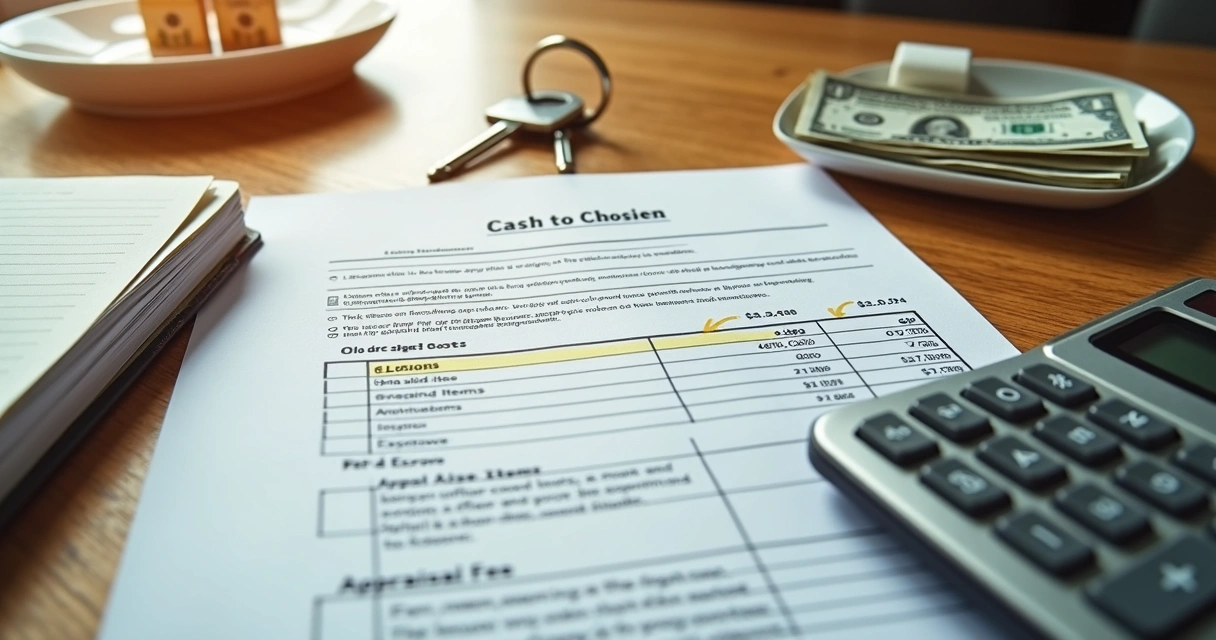
When I talk to home buyers, one line item causes more stress than almost any other: the final amount due at closing. I get it. You may feel ready for the monthly payment, then suddenly see a larger number on the loan paperwork and wonder where it came from. Cash to close is the total amount of money you must bring on closing day after credits, deposits, and loan terms are applied.
In my experience, this amount makes sense once you break it into parts. The Consumer Financial Protection Bureau, or CFPB, shows it in the Closing Disclosure through a cash to close table. Fannie Mae also uses the term to describe the funds a buyer needs to complete the purchase. So this is not a mystery figure. It is a math problem, and each part has a place.
If you are still in the early stage, I suggest reading Heart Mortgage resources on mortgage preapproval for buyers and a broader guide to mortgage loans in the USA. I have seen buyers feel calmer when they know what comes before closing, not just what happens at the end.
What cash to close includes
The cash to close calculation usually combines several moving parts. Some are purchase related, some are lender related, and some are prepaid housing expenses. That is why the number can feel bigger than expected.
Down payment
Closing costs charged by lenders and third parties
Prepaid items such as homeowner’s insurance and daily interest
Initial escrow funding for taxes and insurance, if required
Appraisal and other fees not already paid
Credits that reduce what you owe, such as lender credits or seller credits
Your down payment is only one part of cash to close, not the full amount.
It is more than the down payment.
I have seen buyers get tripped up because they focus only on the percentage down. A 10 percent down payment sounds clear enough, but the final number also includes title charges, recording fees, prepaid taxes, and insurance reserves.
How the calculation works
Here is the simple version I use when explaining it.
You start with all charges due at closing. Then you subtract anything already paid or credited. What remains is the amount you bring, usually by wire transfer or cashier’s check, depending on the closing agent’s rules.
A practical cash to close calculation may look like this:
Purchase price: $350,000
Down payment at 10 percent: $35,000
Closing costs: $8,000
Prepaid items: $3,000
Initial escrow deposit: $2,500
Lender credit: minus $2,000
Earnest money already paid: minus $5,000
In that sample, the amount due at closing would be $41,500.
Cash to close equals your total closing charges plus down payment, minus deposits and credits already applied.
Your Loan Estimate gives an early version of these figures. Your Closing Disclosure gives the final version, usually at least three business days before signing. At Heart Mortgage, this kind of step-by-step review matters because buyers need to see not just the number, but the reason behind it.

Breaking down each part
Closing costs are the charges tied to processing and finalizing the loan and transfer of ownership. These often include lender fees, title work, government recording charges, and settlement services. They vary by loan type, property, and location.
Prepaid items are different. These are not really fees for the transaction itself. They are housing costs collected upfront. In many files, I see prepaid homeowner’s insurance, prepaid interest from the closing date to month end, and sometimes property tax payments depending on timing.
Escrow funds are also easy to mix up with costs. If your loan has an escrow account, the lender may collect a few months of property taxes and insurance in advance. That money sits in the account to help pay future bills when due.
The appraisal fee checks the property value for the lender. Sometimes it is paid early in the process. If not, it can appear in the final amount due. Credits reduce what you owe. A lender credit may offset fees in exchange for a certain interest rate. A seller credit can also help with allowable closing expenses.
Prepaid items and escrow deposits can be part of cash to close even though they are not the same thing as lender fees.
How to read the Closing Disclosure
The CFPB Closing Disclosure cash to close table is one of the most helpful parts of the document. I always tell buyers to slow down here. It shows the path from total closing costs to the final amount due.
Look for these sections:
Total closing costs
Closing costs financed, if any
Down payment or funds from borrower
Deposit, which often includes earnest money
Funds for borrower, in some refinance cases
Seller credits and lender credits
Adjustments and other credits
If you compare the Loan Estimate with the Closing Disclosure, you can see what changed. Some items can move because of timing, tax prorations, insurance choices, or service costs. If a line surprises you, ask for a plain explanation. In my experience, clear lenders do not hide from those questions. That is one reason many buyers appreciate Heart Mortgage and its hands-on support.
If you want a better picture of the full mortgage path before this document lands in your inbox, Heart Mortgage also shares useful guidance on steps to apply for a mortgage in the US and broader updates in its mortgage process articles.
Special case: VA loans
VA loans deserve a quick note because buyers often ask what is included in cash to close for this program. In many cases, the down payment may be low or even zero, which changes the final amount a lot. But zero down does not mean zero due at closing.
VA buyers may still need funds for:
Closing costs not paid by the seller
Prepaid interest
Homeowner’s insurance premiums
Escrow setup for taxes and insurance
The VA funding fee, if it is not financed into the loan and if the borrower is not exempt
That is why the answer to “VA loan cash to close, what is included?” is not always one thing. It depends on the structure of the file, credits, exemptions, and whether certain costs are rolled into the loan.

Ways to avoid surprises
I think buyers feel better when they prepare for the high end of the estimate, not the low end. That gives room for normal changes without panic.
Review your Loan Estimate early and ask what may change
Set aside funds for taxes, insurance, and prepaid interest
Ask whether your appraisal fee was already paid
Confirm any lender credit or seller credit in writing
Check the Closing Disclosure as soon as it arrives
If you are buying your first home, the guidance at Heart Mortgage for first-time home buyers can help you see how these numbers fit into the full purchase plan.
Conclusion
When I look at closing day from a buyer’s point of view, I see one real goal: no last-minute confusion. Cash to close is simply the final amount needed to finish the purchase after adding down payment, closing costs, prepaid items, escrow funding, and any unpaid appraisal charges, then subtracting credits and deposits. Once you know where each figure sits on the Closing Disclosure, the number becomes far less intimidating.
If you want a clearer estimate and personal guidance from application to signing, I suggest speaking with Heart Mortgage and seeing how its team can help you prepare for closing with honesty, speed, and a plan that fits your loan needs.
Frequently asked questions
What is cash to close in home buying?
Cash to close is the total amount a buyer must pay at closing to complete the home purchase. It usually includes the down payment, closing costs, prepaid items, and escrow deposits, minus credits and deposits already paid.
How is cash to close calculated?
It is calculated by adding all amounts due at closing, such as down payment, lender fees, title charges, prepaid insurance, and escrow funds, then subtracting lender credits, seller credits, and earnest money deposits already received.
Are prepaid items included in closing costs?
Prepaid items are often shown alongside closing costs in the final amount due, but they are not the same type of charge. They usually cover upfront insurance premiums, prepaid interest, and similar housing expenses collected at closing.
What’s the difference between down payment and cash to close?
The down payment is the share of the home price you pay upfront. Cash to close is the full amount you need on closing day, which includes the down payment plus other charges, minus credits and deposits.
Do I need escrow funds at closing?
Many buyers do. If the loan requires an escrow account, the lender may collect a few months of property taxes and homeowner’s insurance at closing so future bills can be paid from that account.