Buying your first home in the U.S. is both thrilling and stressful. I remember, in my earliest days helping others, how quickly the excitement could shift to anxiety. Decoding each step of the process, and especially uncovering the lesser-known costs, became a personal mission for me. If you’re like I was, you may wonder: What are the costs people never talk about? What if my credit isn’t perfect? How do I make sense of paperwork, inspections, and all the jargon?
I’m here to share what nobody tells you about buying your first home. I’ll highlight hidden fees, inspection requirements, appraisals, underwriting, escrow, PMI, HOAs, special assessments, and all the small details that get lost in the sales pitch. You’ll find links to real data, practical tips to avoid mistakes, and reasons why companies like Heart Mortgage, with its personalized and flexible approach, are changing how buyers succeed in 2026.
Understanding the surprising costs of homeownership
Many first-time buyers focus only on saving for a down payment and budgeting for monthly mortgage payments. Yet, there’s more lurking under the surface. According to a 2025 industry analysis, ongoing costs like insurance, maintenance, and taxes average more than $21,000 each year. That adds up to 27% of the U.S. median annual income!
- Property taxes: These vary significantly based on location. Even a modest $250,000 home can have annual taxes ranging from $1,200 to $8,000.
- Homeowner’s insurance and flood insurance: Often required by lenders. In some states, flood insurance is a must—potentially another $1,000+ a year.
- Maintenance and repairs: A 2025 analysis reported that average annual maintenance costs can total $10,946 annually, a figure that shocks nearly everyone I speak to. And that’s not counting surprises like a leaky roof or broken AC.
- Utilities: Water, gas, electricity, garbage. Moving from a rented apartment, these costs often double or triple.
- HOA fees and special assessments: If you buy in a community with a Homeowner’s Association, expect recurring fees. And if the community needs a new roof or repairs? Special assessments can hit suddenly and hard.
Unexpected fees never announce themselves. They appear on your first bill.
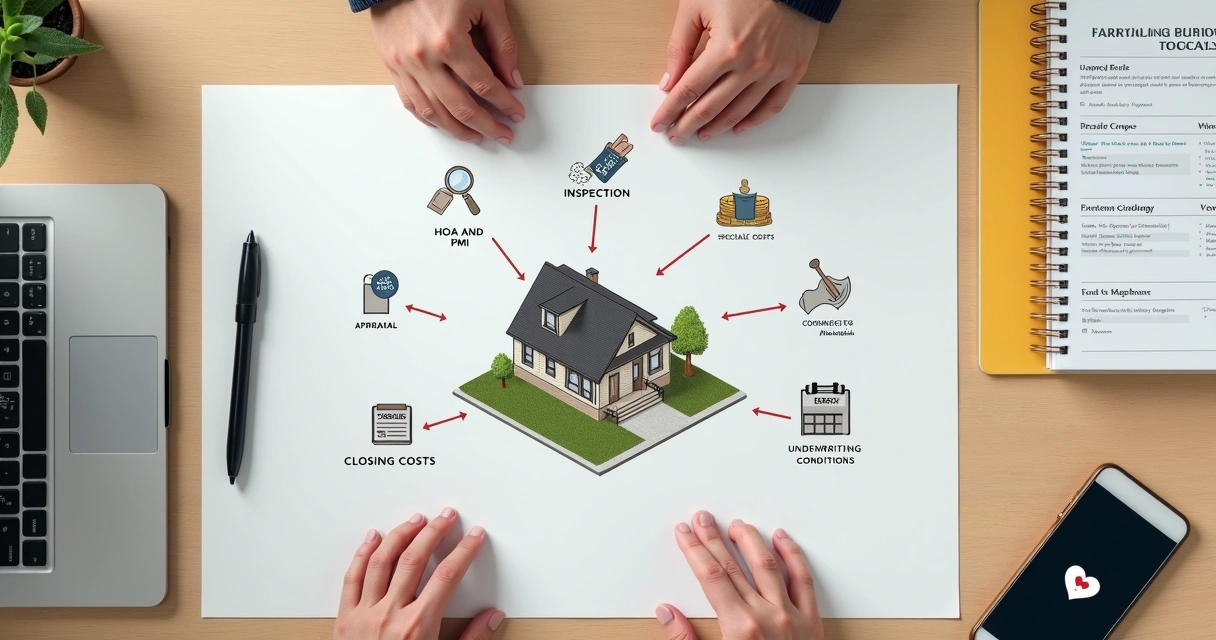
Even the closing itself has costs most buyers forget to budget for, including loan origination, title insurance, and transfer taxes. Sometimes these costs can be rolled into the loan, but then you’ll pay interest on them too.
The hidden world of home inspections
In my experience, buyers sometimes think the home inspection is just a formality, almost optional. In reality, skipping or rushing this step is one of the most common mistakes I see. A standard inspection covers the physical structure, but specialty inspections might be needed for pests, radon, or sewer lines. If your inspector suggests further evaluations, do not ignore them—they can save you thousands.
- General inspection: Checks roof, foundation, plumbing, electrical, HVAC.
- Special inspections: Look for mold, pests, radon, asbestos, or aging septic systems.
- Negotiation tool: If issues are found, you can renegotiate repairs or credits.
I recommend attending the inspection if you can. You’ll see potential problems with your own eyes. And never waive your inspection rights, even in a hot market.

What’s really involved in the appraisal and underwriting process?
Two processes—appraisal and underwriting—often confuse first-time buyers. They serve different purposes, but both can decide if your purchase goes forward.
- Appraisal: This is an unbiased estimate of the property’s value, ordered by your lender. If the appraisal comes in low, either the price is renegotiated or you may need to bring more cash to the table.
- Underwriting: Lenders review your finances and the property’s file to see if you meet their loan standards. Even if you’re “pre-approved,” surprises like new credit inquiries or job changes can trigger issues.
Fannie Mae’s 2026 guidelines for first-timers emphasize having enough cash reserves (typically two months of payments) after closing, so don’t empty your savings for the down payment. Stay responsive and keep paperwork organized to move smoothly through underwriting—this is an area where Heart Mortgage’s hands-on guidance really shines, as I’ve seen stress turn to relief for clients.
Escrow, PMI, and more: What are these, and do you need them?
The homebuying journey introduces lots of terms that at first seem like jargon, but actually have a big effect on cost and peace of mind.
- Escrow is a neutral third-party account where your earnest money, and later your down payment and closing funds, are held until the transaction is complete. It protects both buyer and seller.
- Private mortgage insurance (PMI) is required if you put down less than 20%. It adds a monthly cost—often $40 to $125 on each $100,000 borrowed—until you build enough equity.
- HOA fees are recurring, but special assessments for major projects can pop up once you’ve settled in.
Many buyers are caught off guard when the lender rolls HOA fees or an annual PMI payment into their monthly escrow. Suddenly the “affordable” payment no longer feels as manageable. Again, transparency from your mortgage partner is key—a philosophy central to Heart Mortgage’s mission, as highlighted on their first-time homebuyer resource page.
The closing process: From disclosure to the keys
Getting to closing day often takes longer than you expect, especially if you overlook key steps. Here’s a simple timeline, based on what I’ve seen with hundreds of new buyers:
- Loan application and FHA/conventional selection: Check if you qualify for programs helping first-time or lower-credit buyers—resources like this FHA loan guide for first-timers break it down further.
- Disclosures: Lenders must deliver a Loan Estimate and, later, a Closing Disclosure. Review every line for accuracy. The CFPB’s Closing Disclosure sample can help you know what to expect.
- Home inspection and appraisal as discussed earlier. Don’t skip extra tests if recommended.
- Underwriting review, during which no new debts should be acquired and savings should remain intact.
- Title search and insurance to verify there are no old liens or ownership issues.
- Final walkthrough and closing, usually 3 days after you receive your Closing Disclosure. Bring ID, and review every document before signing.
Preparation is the strongest tool in any homebuyer’s kit.

Common mistakes to avoid in 2026
I often see buyers fall into the same traps year after year. Here’s how to stay clear:
- Relying on online mortgage calculators alone—they never include taxes, insurance, or HOA fees.
- Ignoring pre-approval updates. Even after “pre-approval,” avoid taking on new debt, switching jobs, or making major purchases.
- Waiving inspections for a faster closing. This can cost tens of thousands later.
- Budgeting only up to your maximum approval. I always recommend setting a monthly limit that’s sustainable, considering all recurring expenses and future maintenance.
- Forgetting about rate buydown points. Sometimes paying a little extra at closing to lower your rate can save you more over the life of the loan. Not all lenders explain this well—Heart Mortgage creates clear side-by-side cost breakdowns for clients, ensuring they make informed decisions. For a detailed overview, their complete guide for homebuyers is a valuable reference.
Why ongoing support makes the difference
One thing I wish more buyers knew is how much guidance matters. With Heart Mortgage, clients work directly with advisors, sometimes even the CEO, Lee Dama, making complicated steps simpler. Regular updates, quick responses, and three different ways to connect—online, by phone, or in-person—give people clarity and support from their first question to getting their keys.
Flexible loan options also help buyers with unique credit histories or those needing creative financing. For example, Heart Mortgage’s conventional loan program includes custom options for low down payments, helping more first-timers qualify.
If you want more resources or detailed explanations on any topic in this article, I recommend the Heart Mortgage homebuyer blog, which is filled with up-to-date advice for people just like you.
Conclusion: Take your next step with confidence
I’ve seen the relief in a buyer’s eyes when every step is explained, every cost is made clear, and someone is there to answer the toughest questions—before, during, and after the keys are handed over. With the right partner, you can avoid painful mistakes and approach homeownership with confidence. For transparent advice, fast help, and expert support every step of the way, reach out to Heart Mortgage and see what a difference true guidance makes.
Frequently Asked Questions
What hidden costs come with buying a house?
First-time buyers often face surprise expenses beyond just the price of the home itself. These can include property taxes, homeowner’s insurance, flood insurance (in some locations), HOA fees, utilities, routine maintenance, and special assessments. Studies have shown that these non-mortgage costs can be between $16,000–$21,000 or more a year, depending on location and property type.
What is a home inspection and why important?
A home inspection is a detailed review of a property’s condition by a licensed professional. It helps uncover structural or safety problems you might otherwise miss before purchase. Inspections empower buyers to negotiate repairs, request seller credits, or even walk away if serious issues are found. Skipping an inspection exposes buyers to big and costly surprises later.
How does the appraisal process work?
The appraisal is performed by a neutral, licensed appraiser at the lender’s request. The goal is to confirm the home’s market value matches the price being paid. If the appraisal value is below your offer, you may have to renegotiate, increase your down payment, or, in some cases, cancel the deal. The lender uses this value to set loan limits and conditions.
What is escrow and why is it needed?
Escrow is a financial arrangement where a neutral third party holds money and documents on behalf of both buyer and seller. It protects both sides in the transaction and ensures all requirements are met before funds and ownership are transferred. Escrow also often collects and pays out property taxes and insurance on your behalf after closing.
Is PMI necessary for first-time buyers?
If your down payment is less than 20% of the home’s price, most lenders will require private mortgage insurance (PMI). This protects the lender if you default. While PMI adds to your monthly payment, it allows you to buy with less cash upfront. In time, as you pay down the loan and reach 20% equity, you may be able to remove PMI.