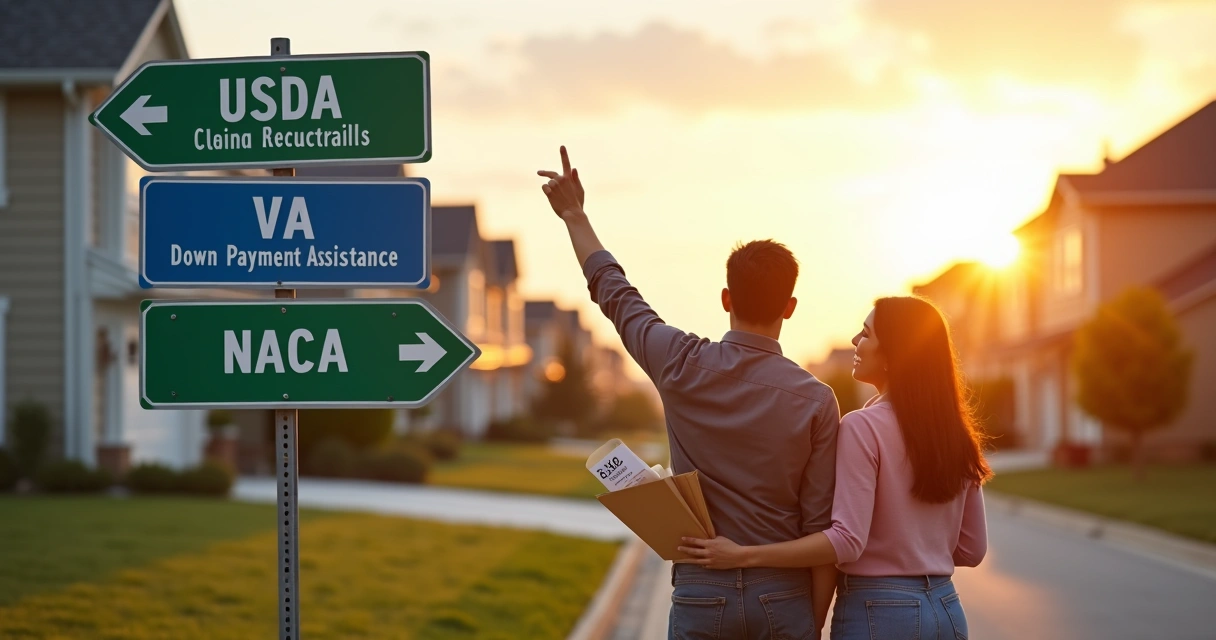
Buying a home in the United States has never been a one-size-fits-all process. When I speak with clients, most assume they’ll need a hefty savings for a down payment. But the reality in 2026 is very different. There are powerful 0% down mortgage options like USDA, VA, and down payment assistance available for buyers in a variety of situations, from first-timers to seasoned investors.
I want to break down the real-world steps, options, and tips for navigating these no down payment programs—so you can move forward with confidence, whether you have limited savings or a unique personal story.
Understanding 0% down mortgage programs for 2026
I’ve seen many hopeful buyers initially feel overwhelmed by the loan landscape. But once you know how programs like USDA, VA, and assistance grants work, the path gets much clearer. Here’s what’s changed and stayed the same as we look ahead to 2026:
- Government-backed programs (USDA and VA) remain the gold standard for true zero down options.
- Down payment assistance is becoming more widely available for buyers of many backgrounds.
- Some conventional options still require low but non-zero down payments, which I’ll compare below.
You don’t need to miss out on homeownership just because you don’t have a large amount set aside for a down payment.
The USDA loan: Zero down for rural and suburban buyers
One of the most popular zero down payment options for 2026 remains the USDA loan. In my experience, it surprises people how flexible this program can be. Sponsored by the U.S. Department of Agriculture, it’s made for buyers in eligible rural and suburban areas, not just for farms or remote locales.
Key features and 2026 rules for USDA loans include:
- No down payment required.
- Low mortgage insurance compared to other programs.
- Property must be in a USDA-eligible zone (these change year to year, so confirm eligibility).
- Income limits apply—household income must generally be below 115% of the area median.
- Must be your primary residence; investment properties aren’t allowed.
I often walk clients through the eligibility check first. Many are amazed to discover that homes quite close to cities qualify as “rural” under the guidelines. At Heart Mortgage, we keep current on the latest eligibility maps and income thresholds to help people qualify when they didn’t think they could.

The VA loan: No down payment for veterans, service members, and surviving spouses
I have deep respect for the men and women who served, and the VA loan remains the most flexible path to 0% down homeownership for those who are eligible.
What stands out about the VA program in 2026?
- No down payment—ever, for purchases up to conforming loan limits.
- No private mortgage insurance (PMI).
- More flexible credit and income criteria compared to many other loans.
- The property must be a primary home.
- Low closing costs, with some fees negotiable or covered by sellers.
The heart of the VA loan is its accessibility. Even applicants with some credit bumps or unique financial history may qualify. When clients come to me frustrated after bank denials, the VA route often turns out to be very possible with the right support. Heart Mortgage specializes in helping veterans untangle the paperwork and get the approvals they deserve.
Down payment assistance: Bridging the gap for many homebuyers
For buyers who don’t fit into USDA or VA boxes—such as those in urban areas, or with incomes just above government cutoffs—down payment assistance (DPA) can be the missing link. There are hundreds of local, state, and even private programs offering grants or forgivable loans to cover part or all of your upfront costs.
Here’s what I look for when I help clients use down payment aid:
- Eligibility based on income, occupation (teachers, first responders, etc.), or location.
- Funds may be a true grant (no repayment) or a loan deferred until you sell/leave the home.
- DPA can sometimes be combined with low down payment loans for zero out-of-pocket options.
- Program rules vary each year, so 2026 will bring some new possibilities.
Down payment assistance can make homeownership realistic for families who cannot save thousands. Many clients are amazed when they realize these opportunities extend beyond just low-income buyers—they help teachers, healthcare professionals, and others essential to communities.

NACA’s no down payment program: An alternative for buyers with complex profiles
I often recommend clients with unique financial backgrounds or thin credit files look into options like the NACA program. What draws people is not just the 0% down requirement but also the flexible approach to credit scoring and debt. The NACA program offers:
- No down payment and no private mortgage insurance.
- No minimum credit score—based on ability and willingness to pay rather than numbers alone.
- Below-market, fixed-rate interest options.
- Limitations: Buyers must attend counseling sessions and meet affordability limits.
While the paperwork and requirements can seem more involved, I’ve seen this program work well for those willing to put in the effort to meet its guidelines. Heart Mortgage always explains both the effort required and the lasting benefits to clients considering this path.
Comparing with Fannie Mae HomeReady and FHA loans
I get a lot of questions about “low down” versus “no down” loans. While 0% down payment programs stand out, it’s wise to compare them to top alternatives. Here’s how Fannie Mae HomeReady and FHA loans stack up as of 2026:
Fannie Mae HomeReady
- Minimum 3% down payment.
- Low mortgage insurance.
- Low-to-moderate incomes; can include non-occupant co-borrowers.
This is a strong option if you don’t qualify for USDA or VA. You can read more about these conventional programs at the Heart Mortgage conventional loan guide.
FHA loans
- 3.5% down payment with credit scores of 580 or higher.
- Flexible for buyers with lower credit, past bankruptcies, or high debt-to-income ratios.
- Up-front mortgage insurance and ongoing monthly premiums apply.
If you have some savings and need more flexibility on credit, FHA remains a reliable stepping stone. You can compare all available mortgages—including these low down payment options—at Heart Mortgage’s programs page.
How Heart Mortgage guides you through 0% down paths
My focus as a mortgage professional always comes down to this:
Honest answers and practical steps can turn your dream into an address.
At Heart Mortgage, we review every client’s story, goals, and finances with care, helping you target the program that fits. We’re by your side for each step—eligibility checks, paperwork, timing, and even negotiation—with forms of contact that match your schedule (online, phone, or in-person).
- Support for buyers with complex backgrounds—from foreign nationals to those with non-traditional income.
- Constant updates on what’s changing for 2026, so you don’t miss new grants or policy tweaks.
- Direct insight into all the official programs and their practical use (you can find more detail on first-time options in our first-time homebuyer guide).
I also recommend reading our mortgage knowledge articles at the Heart Mortgage blog and the full Mortgage Loans USA guide for deeper information. These resources are always updated with the latest 2026 details.
Conclusion: The path to your home is open
In 2026, there are now more ways to buy a home with no down payment than ever before. USDA and VA loans, NACA programs, and a wide range of down payment assistance opportunities mean that even with limited savings or a non-traditional history, you may qualify. Working with Heart Mortgage means having a professional partner to untangle the options and guide you every step of the way—right up to the front door of your new home.
If you want to unlock your options for a 0% down mortgage, contact Heart Mortgage today. Together, we can find a solution that fits your needs and makes homeownership a reality.
Frequently asked questions
What is a 0% down mortgage?
A 0% down mortgage is a home loan that allows you to purchase a property without making any initial down payment at closing. This means you can buy a home without first saving thousands of dollars, opening doors for many first-time buyers and those without large savings.
How do USDA and VA loans work?
USDA loans are government-backed loans for rural and suburban buyers with no down payment, while VA loans provide no down payment mortgages for eligible veterans, active duty service members, and surviving spouses. Both programs require that the home is a primary residence, and they offer competitive interest rates and reduced mortgage insurance compared to other loans.
Who qualifies for no down payment mortgages?
USDA loans require you to buy in a qualifying area and meet income limits. VA loans are for eligible military and related personnel. Some down payment assistance programs or alternatives like NACA may allow other buyers to qualify, especially those with non-traditional credit or unique situations.
Are down payment assistance programs worth it?
Yes, down payment assistance can be a valuable tool for buyers who lack enough savings or who want help reducing out-of-pocket costs. Many programs offer grants or forgivable loans, letting buyers achieve homeownership sooner. The key is to review the fine print about eligibility and repayment rules.
Where to find 0% down home loans?
The best way to find 0% down home loans is to work with mortgage professionals familiar with all government and local programs, like those at Heart Mortgage. We stay current on available options—including USDA, VA, NACA, and local assistance—and can match you with the right solution for your background and needs.