
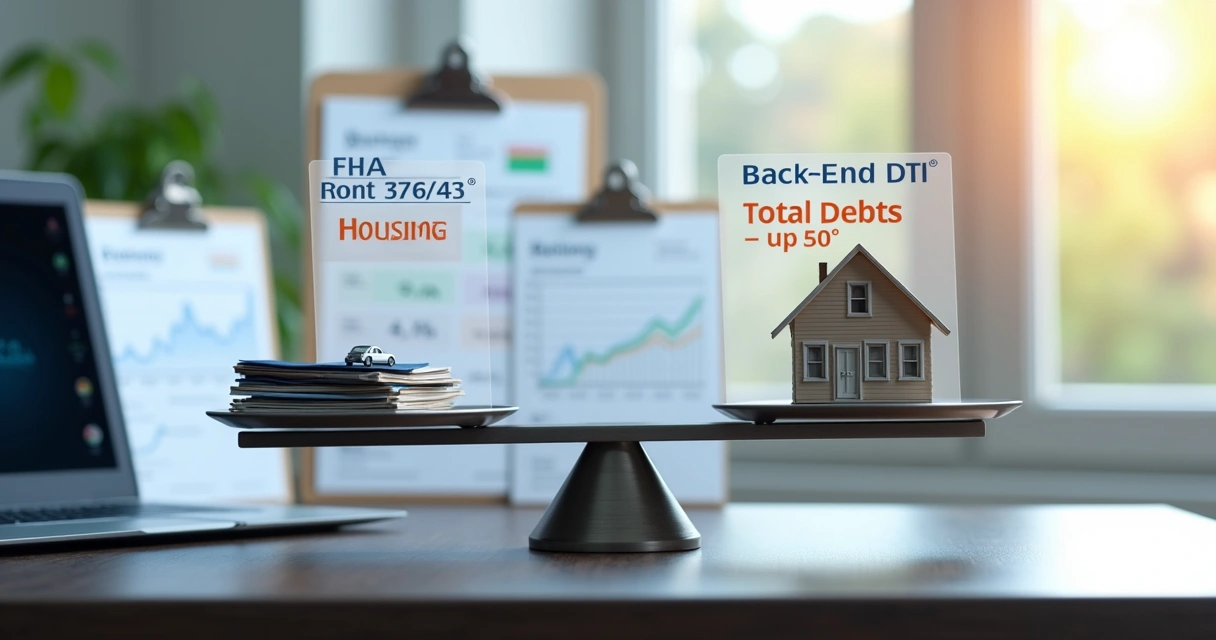
I have watched the mortgage landscape shift in subtle but meaningful ways over the years. If you are a first-time homebuyer, understanding how debt-to-income (DTI) ratios, FHA, and conventional loan guidelines shape your affordability in 2026 is the first real step on the journey to homeownership. The data for 2026 shows tweaks in DTI calculations, recent updates in mortgage rates, and fresh perspectives on FHA versus conventional loans. I want to make these details practical, so you know how to successfully approach buying your home—even in a challenging market.
What shapes home affordability in 2026?
Home affordability for first-time buyers in 2026 is determined by several factors working together. These include income, overall debts, property taxes, insurance, and, of course, interest rates. One thing stands out: DTI requirements are front and center. Every lender, whether for FHA or conventional loans, will use these standards to assess how much you can borrow.
- Front-end DTI: This is the percentage of your monthly gross income spent on housing costs (like mortgage, property taxes, insurance).
- Back-end DTI: This measures all monthly debts, including credit cards, car loans, student loans, plus your future housing payment.
The path to homeownership always starts with your DTI ratio.
The guidelines used by FHA and conventional lenders do shift slightly each year, but their core goal is the same: ensuring you can afford your home payment for the long term. I’ve noticed many buyers feel surprised by how much—or how little—they can qualify for, simply based on DTI rules.
2026 DTI guidelines: FHA vs. conventional loans
For 2026, lenders remain strict but not inflexible. FHA and conventional loans each have their own rules for front-end and back-end DTI, but compensating factors sometimes make approvals possible even when you’re over the guidelines. Here’s how the two compare this year:
- FHA loans: The FHA standard for front-end DTI in 2026 is 31%. This means your mortgage, taxes, homeowners insurance, and fees cannot exceed 31% of your gross monthly income.
- For back-end DTI, FHA’s base guideline sits at 43%, which covers all debts, but can stretch to around 50% if you have strong compensating factors: significant cash reserves, a stellar credit score, or a bigger down payment. For details, review the FHA loan guide for first-time and low-credit homebuyers.
- Conventional loans: Most conventional lenders follow Fannie Mae’s guidance: the typical maximum DTI in 2026 is 36% front-end, with many lenders allowing up to 45% back-end, and in specific cases, as much as 50% if your credit and assets are strong. These thresholds are confirmed in the latest industry updates, and you can find a simple breakdown at the conventional program page for Heart Mortgage.
DTI ratios are usually the number one reason borrowers are declined for a mortgage—even when their credit score is good. This alone is why understanding the 2026 guidelines matters so much.
2026 average 30-year fixed mortgage rates: Latest numbers
The affordability picture always changes when rates move. As of June 2026, the 30-year fixed mortgage rate has hovered around mid-6% territory. According to a Freddie Mac Primary Mortgage Market Survey, the average settled at 6.52%, just up from the week before at 6.48%. This is backed by another Freddie Mac report and recent numbers from Fortune, which list 6.532% as a national average for conforming loans.
Every tenth of a percent on your mortgage rate changes your monthly affordability—sometimes by more than you’d expect.
I’ve helped clients run the numbers at different rates. To see your own scenario, use this home affordability calculator—even a small rate change can shift your price target.
How compensating factors help borrowers in 2026
I often work with clients who come close to DTI limits or just over. Here, compensating factors really do provide a second chance:
- Higher credit score—usually 700 or above
- Larger down payment—often 10% or more
- Significant savings or cash reserves
- Strong history of timely rent or mortgage payments
For FHA applicants, a DTI above the textbook 43% can still be approved if these strengths are present. The same logic applies to conventional, especially if you have strong Fannie Mae Desktop Underwriter findings. This flexibility reflects lenders’ recognition that real people rarely fit a perfect mold.

Why many buyers choose FHA in 2026
I have seen just how many first-time homebuyers turn to FHA loans. Even with unchanged DTI rules in 2026, the FHA program remains friendly to newer buyers, renters, and those recovering from credit challenges. The lower minimum credit score, allowance for smaller down payments, and greater acceptance of gift funds all make FHA very attractive.
Keep in mind, though, that even with a more flexible back-end DTI cap (sometimes over 43% with those compensating factors), FHA loans come with mortgage insurance costs that last for many years. Calculating the true monthly and yearly cost is part of my regular process with clients so there are no surprises.
For more detail on how FHA compares for those newer to the market, see the guidance at the Heart Mortgage mortgage education center. It’s packed with updates every month.
How Heart Mortgage helps buyers in 2026
I genuinely believe specialized support makes the difference. At Heart Mortgage, I have helped buyers with low credit, high DTI, and even complex self-employed finances get clear, honest answers—and find pathways to approval. Our experience means I know when an FHA loan provides the flexibility you need, and when conventional opens more doors. The process can feel complex, but our team’s transparency and fast feedback mean you’re never left wondering about next steps or hidden hurdles.
- Direct and honest feedback after a quick review of your financials
- Access to both FHA and conventional programs, explained with real numbers
- Guidance on what compensating factors are realistic for you this year
- Flexibility to apply, ask questions, and get support online, by phone, or in-person

If you are just starting out, I suggest reviewing the prepared resources at the first-time homebuyer hub, which puts all 2026 DTI and loan guidance in plain language. First-time buyers, I’ve found, gain real confidence once they have numbers and facts tailored to them.
Putting it all together: 2026 affordability takeaways
Looking back at all the 2026 first-time homebuyer affordability guidelines, I see a housing market that still offers opportunity—if you take a measured, informed approach. With mortgage rates settling in the mid-6% range and DTI rules staying steady but strict, being ready with your numbers is more valuable than ever.
Whether you lean toward FHA for flexibility or conventional for potentially lower long-term costs, the right loan solution comes from careful evaluation and open conversation. At Heart Mortgage, our job is to give you this clarity—every step, fully explained, with no surprises. If you want guidance or just a straight answer about where you stand for a mortgage this year, reach out and see the difference genuine experience makes.
Frequently asked questions
What is a front-end debt-to-income ratio?
The front-end DTI ratio is the percentage of your gross monthly income that goes toward your total housing expenses, such as your future mortgage payment, property taxes, and homeowners insurance. Lenders use this to judge if your housing costs are reasonable compared to your income.
How does FHA DTI differ from conventional?
FHA loans use slightly more generous guidelines—the standard FHA front-end DTI is 31% and the back-end can reach up to 43% or more with strong compensating factors. Conventional loans usually set the standard DTI between 36–45% (and sometimes up to 50% for well-qualified buyers), but are typically stricter on credit score and down payment requirements. Each loan type targets different borrower needs and flexibility levels.
What are 2026 DTI limits for first-time buyers?
For 2026, FHA’s DTI cap is 31% for front-end and 43% for back-end, but this can increase to around 50% if compensating factors are present. Conventional loans generally use 36–45% as a back-end DTI maximum, but again, up to 50% is possible in the right scenarios. These limits are key benchmarks for pre-approval.
How can I improve my DTI ratio?
You can improve your DTI by paying down debts, limiting new credit obligations before applying, increasing your income, or making a bigger down payment. Sometimes combining several small changes has a bigger impact than a single adjustment. Tracking your monthly spending and using online calculators for real-time feedback is helpful.
Is FHA or conventional better in 2026?
It depends on your unique situation. If you have lower credit, less saved for down payment, or are close to DTI limits, FHA is often a solid choice because it’s more forgiving. If your credit is strong and you have a larger down payment, conventional may mean lower overall costs and more flexibility in the long run. Comparing both with your full scenario provides the honest answer—which is something Heart Mortgage is always happy to do for you.